
How Are Drug Crime Charges Proven in Court?
If you are facing criminal charges, it's common to have questions about how the prosecution will build a case against you and the types of evidence they will rely on in court. Drug crime cases often depend on whether the prosecution can prove every required legal element beyond a reasonable doubt. Therefore, it's essential to work with an experienced attorney who can help you protect your rights.
At Metro Law Firm, I am dedicated to helping clients prepare strong defenses for drug charges at every stage of the criminal process. Whether you are facing a first-time charge or a repeat offense, my firm can help you understand the steps the prosecution may take to prove the charges against you and seek a conviction.
Located in Richland, Washington, I serve clients throughout the Tri-Cities area, including Kennewick, Pasco, Benton-Franklin County, Yakima County, Walla Walla County, and Seattle. Contact me today to schedule a complimentary consultation.
What Prosecutors Must Prove in a Criminal Drug Case
In a drug case, the prosecution has a strict burden of proof. Rather than expecting you to prove your innocence, prosecutors must present evidence showing every element of the offense beyond a reasonable doubt. If the prosecution hasn't met that burden, you and your attorney may be able to identify weaknesses in their evidence. Although the required elements depend on the specific charge, prosecutors generally must establish several important facts.
Possession: The prosecution must prove you knowingly possessed the controlled substance. Possession can involve drugs found on your person or in a location where prosecutors claim you exercised control.
Knowledge: The evidence must show that you knew the substance existed. Simply being near drugs doesn't automatically establish criminal responsibility or intent.
Identity of the substance: Laboratory testing is commonly used to confirm the substance involved meets Washington's legal definition of a controlled substance.
Intent when required: Certain charges, including possession with intent to deliver, require additional evidence showing the drugs weren't solely for personal use.
Once the prosecution presents its evidence, it becomes subject to review. That's where careful legal analysis is especially valuable when building a criminal defense.
Evidence Commonly Used to Support Drug Charges
Criminal drug cases often involve several types of evidence collected during an investigation. Each category can affect how the prosecution attempts to prove its case, and each deserves careful examination by an experienced Washington criminal defense lawyer. The common types of evidence the prosecution might present include the following:
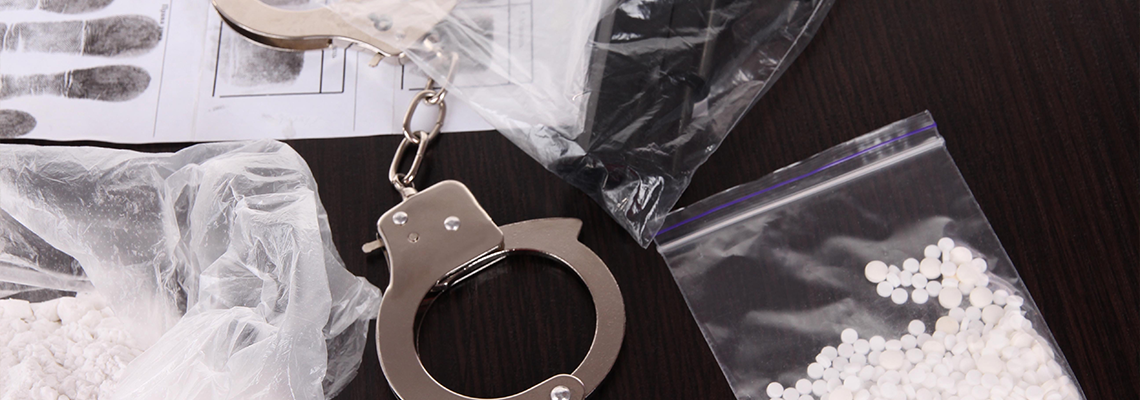
Physical evidence: Drugs, packaging materials, scales, cash, or other items recovered during a search.
Laboratory reports: Criminal laboratory reports that identify what was seized and the suspected controlled substances.
Officer testimony: Law enforcement officer descriptions of traffic stops, searches, arrests, interviews, and observations made during the investigation.
Witness statements: Testimony from witnesses who claim to have knowledge of the events surrounding your arrest.
Digital evidence: Text messages, phone records, social media communications, or electronic transactions.
Not every piece of evidence carries the same weight. Before your case goes to trial, you and your attorney may be able to file motions or challenges to determine whether certain evidence should even be presented to a jury. Carefully reviewing the prosecution's evidence may reveal constitutional violations, inconsistencies, or procedural errors that could weaken the prosecution's case before it reaches the courtroom.
How to Challenge the Prosecution's Evidence
A strong criminal defense begins long before trial. If you have been charged with a drug crime, contact a criminal defense lawyer as soon as possible and carefully review any applicable police reports, body camera footage, laboratory findings, and witness statements to determine whether your constitutional rights were respected throughout the investigation. Several strategies you might be able to use to challenge the evidence against you include the following.
Unlawful searches: If officers conducted a search without legal authority or a valid exception to the warrant requirement, your attorney can petition the court to suppress the improperly obtained evidence.
Problems with probable cause: Arrests and searches must be supported by sufficient legal justification. Weak factual support can affect the admissibility of evidence.
Chain of custody concerns: Prosecutors must account for how evidence was collected, stored, transported, and tested. Missing documentation or breaks in the chain of custody can raise questions about the reliability of the evidence.
Laboratory testing issues: Testing procedures, equipment, and reporting methods must be carefully reviewed to identify inconsistencies or errors in their calibration or how they were administered.
When evidence becomes unavailable because of constitutional violations, prosecutors often face greater difficulty proving every required element of the offense. If enough admissible evidence remains, however, the case will continue toward trial.
How the Court Evaluates the Evidence at Trial
During trial, both sides will have the opportunity to present evidence. The prosecution will call witnesses first, and the defense will have the opportunity to cross-examine each witness and challenge the reliability of their testimony.
Your Washington drug crime lawyer will also have the chance to present evidence when appropriate, question the credibility of prosecution witnesses, and identify inconsistencies that create reasonable doubt. When determining your case, jurors will evaluate the following factors:
The credibility of the witnesses: Jurors will decide whether testimony appears accurate, consistent, and believable after hearing direct and cross-examination.
The reliability of the physical evidence: Evidence must directly connect to the charges and be properly preserved throughout the investigation.
The consistency of the prosecution's case: Conflicting testimony, missing evidence, or investigative mistakes can affect whether prosecutors satisfy their burden of proof.
Reasonable doubt: If jurors have a reasonable doubt about any required element of the offense, they must return a verdict of not guilty.
The verdict will depend on the evidence presented in court rather than assumptions or accusations. If you are facing a criminal drug charge in Washington state, reach out to my firm today to explore your options and build a credible defense.
Contact My Firm for Experienced Criminal Defense Representation
Criminal drug charges deserve careful attention from the moment an investigation begins. As a criminal defense attorney, I will work with you to review the evidence, challenge improper investigative practices, protect your constitutional rights, and build a defense based on the facts of your case. Taking prompt action can provide key opportunities to address issues before trial.
If you've been charged with a drug offense, I can help you evaluate your legal options and prepare a defense tailored to your circumstances. My firm serves clients throughout Tri-Cities, Washington, including Kennewick, Pasco, Richland, Benton-Franklin County, Yakima County, Walla Walla County, and Seattle. Contact me, Attorney Gary Metro, today to schedule a complimentary case evaluation.